DRF.
Equipment Details
Active
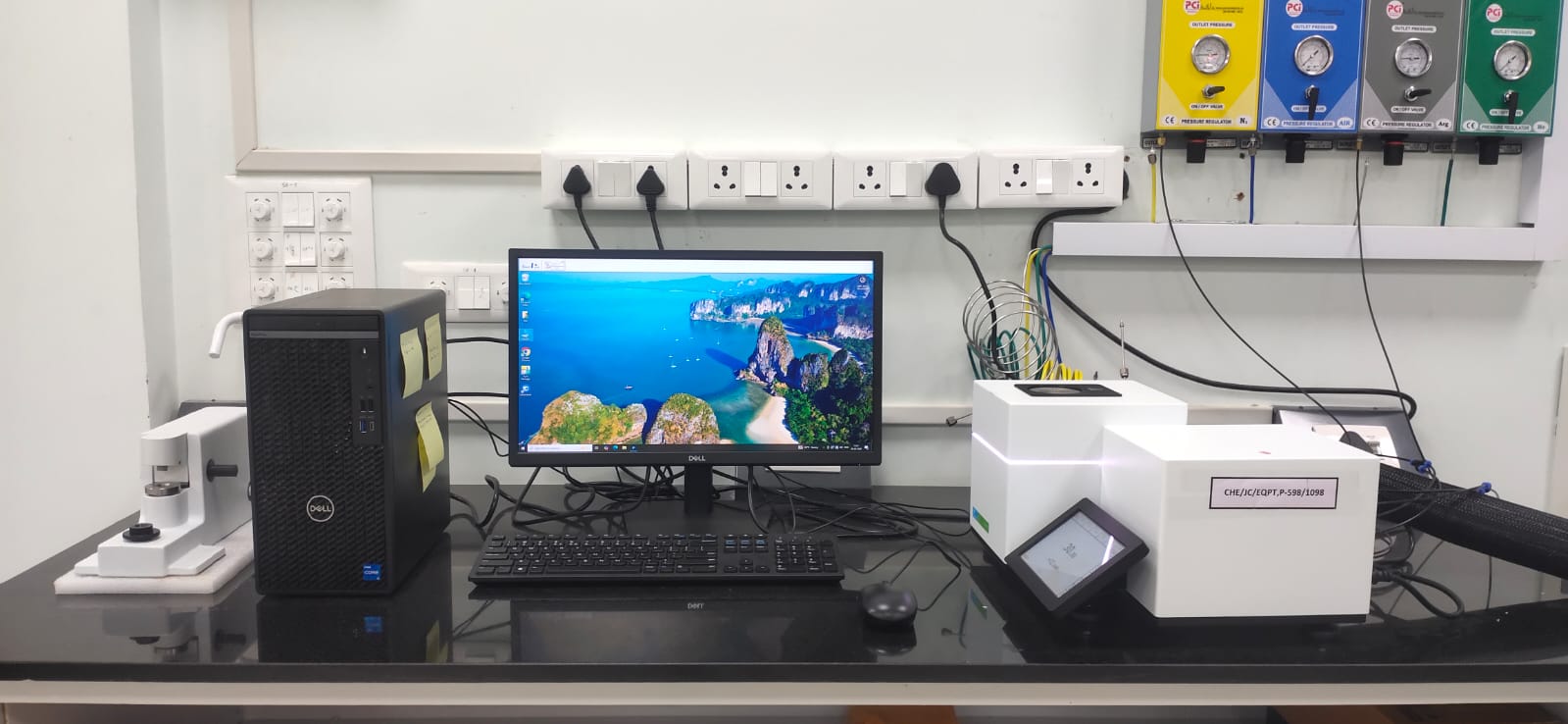
Differential Scanning Calorimetry (DSC) Analyzer
Explore the technical specifications and detailed description of this equipment below.
Quick Information
- Rate / Slot To be decided
- Date of Purchase Not Specified
- Custodian Name N/A
- Operator Name Mr Anup Dolai
- Official Link N/A
Description
The Differential Scanning Calorimetry (DSC) Analyzer is a core thermal analysis instrument used to measure how a material’s physical properties change with temperature. It operates by heating or cooling a sample and an inert reference pan at a controlled, identical rate. The instrument monitors the difference in heat flow required to maintain both pans at the exact same temperature.
When the sample undergoes a physical transformation—such as melting, crystallization, or a glass transition—it will either absorb heat (endothermic) or release heat (exothermic). The DSC records these energy changes in real time, producing a thermal curve that serves as a unique fingerprint for the material.
Primary Uses:
• Polymer & Plastic Characterization: To find the glass transition temperature (T_g), melting point (T_m), and percentage of crystallinity.
• Pharmaceutical Analysis: To check drug purity, detect different crystalline structures (polymorphs), and test shelf-life stability.
• Chemical Reaction Monitoring: To study curing profiles, cross-linking in resins, and thermal decomposition limits.
Technical Specifications
Temperature Range: -50°C to 500°C
• Temperature Accuracy/Precision: ±0.1°C / ±0.05°C
• Heating/Cooling Rates: 5°C to 200°C/min
• Measurement Range: ±500 mW
• Calorimetric Sensitivity: 0.04 µW
• Baseline Flatness: ±10 µW
• Sample Mass Capacity: 2 mg to 9.5 mg (Pan volume ~10 µL)
• Gas Control: Mass Flow Controllers (0–20 mL/min) for N₂, Ar
• Cooling Systems: Intracooler