IIT Kharagpur Logo
IIT Kharagpur Dept. of Chemical Engineering

Departmental Research Facility (DRF)

We accept booking for internal & external samples

Capabilities of DRF

What you can do in DRF?

Welcome to the Departmental ERP (DERP) portal, the central management platform for the Departmental Research Facility (DRF) that manages all advanced scientific equipments and experimental workflows. The system automates slot bookings, project management, and fund management, requiring users to update their project details and fund credentials within DERP before booking an instrument slot.

Explore Lab Equipments

Browse and discover our catalog of high-performance instruments supported by the department.

AAS
Under Maintenance

AAS

This is a dummy text.

Technical Specs

This is a dummy text.

AntonPaar BET (Old DRF)
Under Maintenance

AntonPaar BET (Old DRF)

This is a dummy text.

Technical Specs

This is a dummy text.

BET Altamira
Active

BET Altamira

: The BET surface area is the total surface area (m2/g) per unit mass of material. The pore size distribution refers to the change of pore volume with the pore size of the material. Both are the most important physical properties of porous materials, especially nano-materials. There are many methods for determining BET surface area and pore size distribution. Nitrogen adsorption is the most commonly used and reliable method Brunauer-Emmett-Teller (BET) surface area analysis is the multi-point measurement of an analyte’s specific surface area (m2/g) through gas adsorption analysis, where an inert gas such as nitrogen is continuously flowed over a solid sample, or the solid sample is suspended in a defined gaseous volume. Small gas molecules adsorb to the solid substrate and its porous structures due to weak van der Waals forces, forming a monolayer of adsorbed gas. This monomolecular layer, and the rate of adsorption, can be used to calculate the specific surface area of a solid sample and its porous geometry, informing studies into the reactivity and bioavailability of pharmaceutical products.

Technical Specs

Specifications: 1) Sample weight: min 100 mg 2) Degassing temperature and degassing time is required 3) Type of analysis required Microporous/ Mesoporous 4) Test range : 0.0001 m2/g to infinity (BET surface area); 0.35 nm~500 nm (mesopore and macroporous analysis); Pore volume 0.0001 cm³/g to infinity 5) Degassing temperature: RT to 250° 6) Available Gas Modes: Nitrogen

BET Micromeritics (3-Flex)
Active

BET Micromeritics (3-Flex)

The 3Flex high-performance gas adsorption analyzer is the most advanced instrument for measuring surface area, pore size, and pore volume of both powders and particulate materials.The 3Flex is ideally suited for gas or vapor adsorption analysis of microporous (< 2 nm) and mesoporous (2 to 50 nm) samples and a wide variety of porous and non-porous materials. Brunauer-Emmett-Teller (BET) surface area analysis is the multi-point measurement of an analyte’s specific surface area (m2/g) through gas adsorption analysis, where an inert gas such as nitrogen is continuously flowed over a solid sample, or the solid sample is suspended in a defined gaseous volume. Features: a)Surface area b)Mesopore c)Micropore d)Vapor sorption

Technical Specs

Specifications: 1) Sample weight: min 100 mg 2) Degassing temperature and degassing time is required

Bomb calorimeter
Under Maintenance

Bomb calorimeter

This is a dummy text.

Technical Specs

This is a dummy text.

Chemisorption Altamira
Active

Chemisorption Altamira

The AMI-300 Catalyst Characterization System is designed to aid the user to perform a host of automated analytical functions. These functions are separated into several groups some of which are made available to the user as options. The standard AMI-300 system performs Temperature Programmed Reduction (TPR), Temperature Programmed Oxidation (TPO), Temperature Programmed Desorption (TPD), Pulse Chemisorption. In addition Treatment and Pulse Calibration procedures are included for treatment and degassing of samples and calibration of results, respectively. The TPR/TPO procedure consists of three steps: • Start Conditions , Ramp&Hold , Postflush The TPD procedure consists of four steps, in addition to the adsorption step: • Flush • Initial Conditions • Ramp&Hold • Postflush In Pulse Chemisorption a series of premeasured pulses of an adsorbate are passed through the catalyst bed at regular intervals. The amount of gas that is not adsorbed by the catalyst is detected.

Technical Specs

Specifications: Minimum amount of sample required : 1) H2-TPR > 50 mg 2) H2/CO2/NH3 TPD > 150 mg 3) TPO > 50 mg 4) H2/ CO Chemisorption > 150 mg Information required: 1) Degassing Temperature 2) Holding time for Degas 3) Ramp Rate 4) TPR/TPO/TPD/Chemisorption Temperature

CHNS
Under Maintenance

CHNS

This is a dummy text.

Technical Specs

This is a dummy text.

DSC (Differential Scanning Calorimeter )
Under Maintenance

DSC (Differential Scanning Calorimeter )

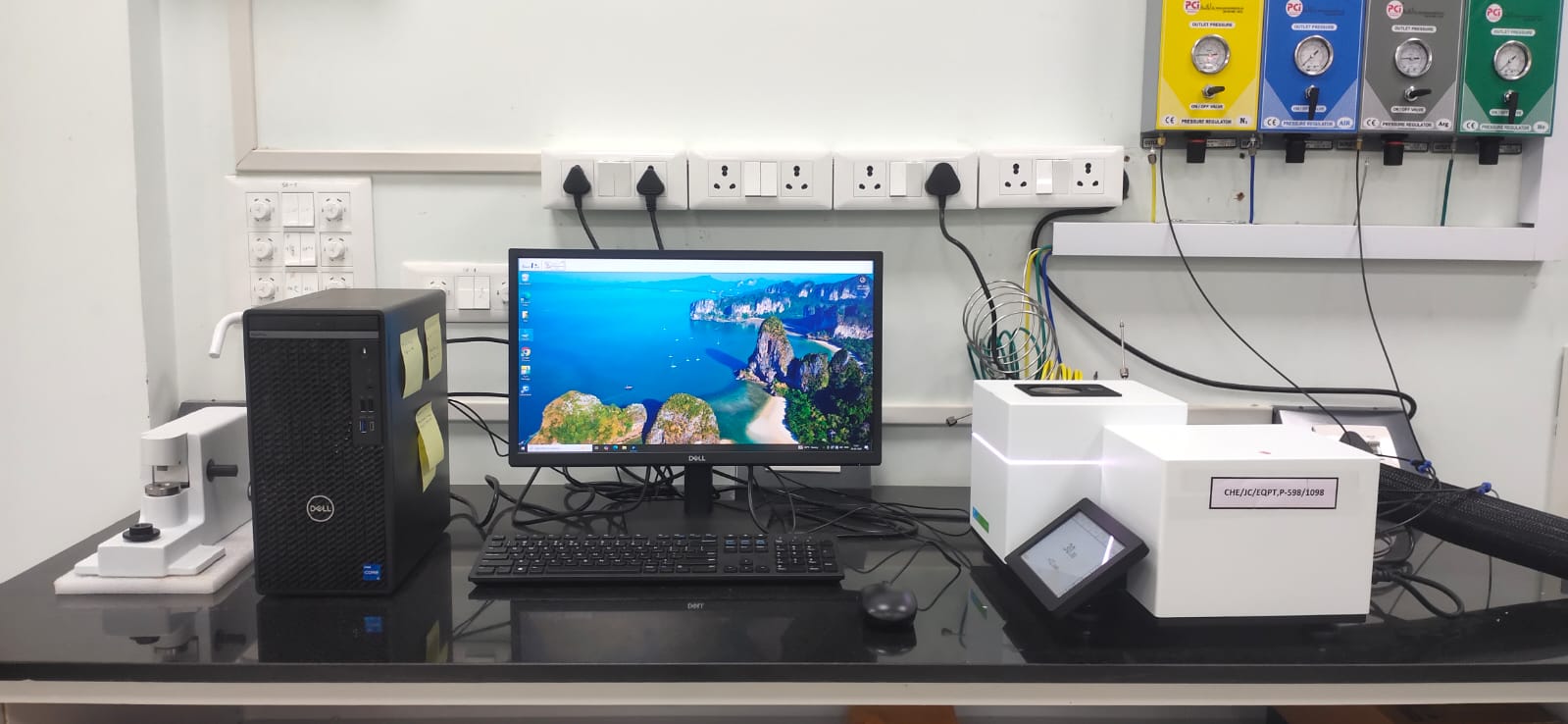
The PerkinElmer Pyris DSC 9 is a high-temperature, compact Differential Scanning Calorimeter (up to 750 °C) engineered for high-throughput labs, polymers, and pharmaceuticals.

Technical Specs

Key Specifications for the Pyris DSC 9: Temperature Range: -50°C to 500°C. Pan Design: Aluminium made.

FESEM
Active

FESEM

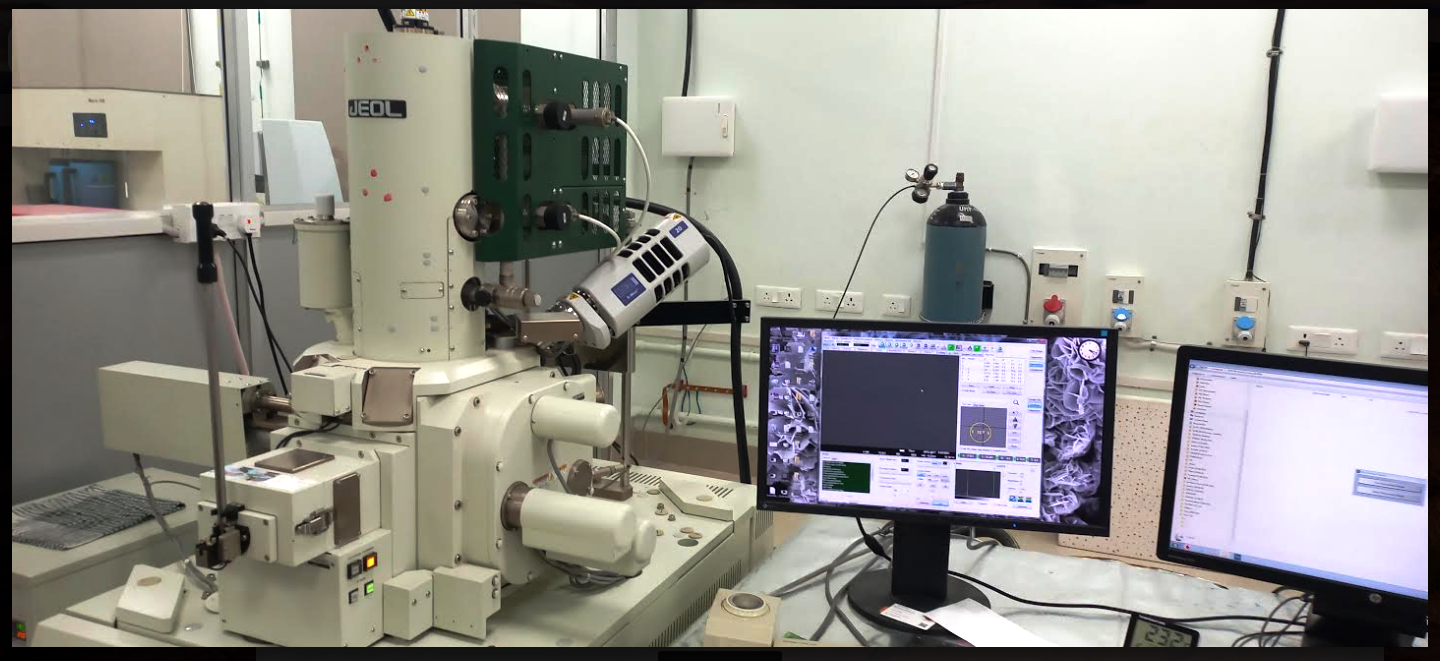
FE-SEM is typically performed in a high vacuum because gas molecules tend to disturb the electron beam and the emitted secondary and backscattered electrons used for imaging. In addition to FE-SEM, energy-dispersive X-ray (EDX) was conducted on the same specimens for further analysis. EDX is an X-ray technique used to identify the elemental composition of materials. These systems are attachments to electron microscopy instruments where the imaging capability of the microscope identifies the specimens of interest

Technical Specs

 The ability to examine smaller-area contamination spots at electron accelerating voltages compatible with energy dispersive spectroscopy (EDS).  Reduced penetration of low-kinetic-energy electrons probes closer to the immediate material surface.  High-quality, low-voltage images with negligible electrical charging of samples (accelerating voltages ranging from 0.5 to 30 kilovolts).  Essentially no need for placing conducting coatings on insulating materials  Semiconductor device cross section analyses for gate widths, gate oxides, film thicknesses, and construction details  Advanced coating thickness and structure uniformity determination  Small contamination feature geometry and elemental composition measurement

FTIR
Under Maintenance

FTIR

This is a dummy text.

Technical Specs

This is a dummy text.

GC
Under Maintenance

GC

This is a dummy text.

Technical Specs

This is a dummy text.

GC-MS
Under Maintenance

GC-MS

This is a dummy text.

Technical Specs

This is a dummy text.

HPLC (New)
Under Maintenance

HPLC (New)

This is a dummy text.

Technical Specs

This is a dummy text.

HPLC (Old)
Under Maintenance

HPLC (Old)

This is a dummy text.

Technical Specs

This is a dummy text.

Particle Size Analyzer (Malvern)
Under Maintenance

Particle Size Analyzer (Malvern)

This is a dummy text.

Technical Specs

This is a dummy text.

Perkin Elmer GC (Old DRF)
Under Maintenance

Perkin Elmer GC (Old DRF)

This is a dummy text.

Technical Specs

This is a dummy text.

Rheometer
Under Maintenance

Rheometer

This is a dummy text.

Technical Specs

This is a dummy text.

Thermogravimetric Analysis and Mass Spectrometry (TGA-MS)
Active

Thermogravimetric Analysis and Mass Spectrometry (TGA-MS)

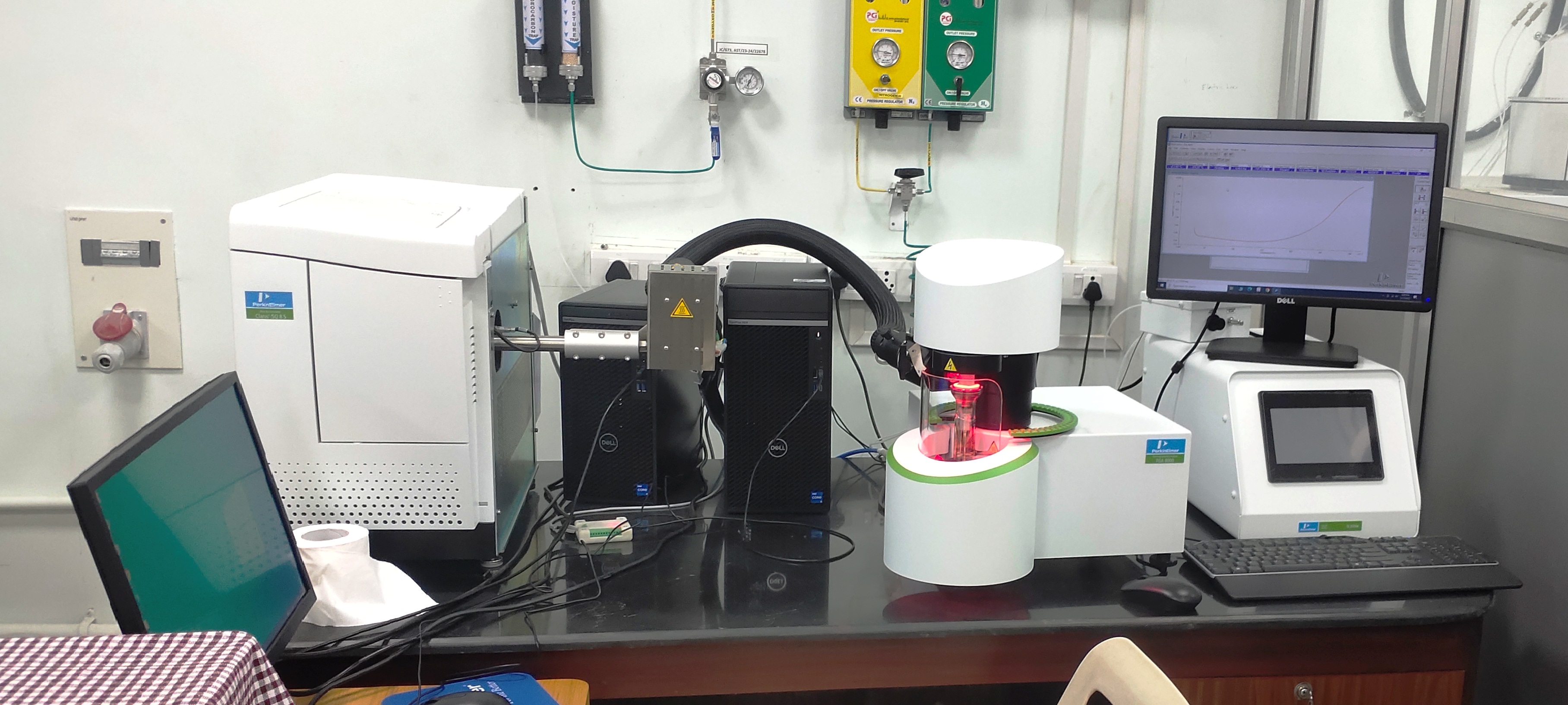
Thermogravimetric Analysis-Mass Spectrometry (TGA-MS) Analyzer: Comprehensive Description 1. Overview: The Thermogravimetric Analysis-Mass Spectrometry (TGA-MS) Analyzer is an advanced hyphenated analytical instrument that combines Thermogravimetric Analysis (TGA) with Mass Spectrometry (MS) to study the thermal decomposition and evolved gas composition of materials. This system provides simultaneous measurement of weight loss (TGA) and gas-phase analysis (MS), offering valuable insights into material stability, decomposition mechanisms, and volatile byproducts. 2. Key Components: A TGA-MS system consists of two main modules: 2.1 Thermogravimetric Analyzer (TGA): - Measures changes in a sample’s mass as a function of temperature or time in a controlled atmosphere (inert, oxidizing, or reducing). - Key Features: - High-precision microbalance (±0.1 µg sensitivity). - Programmable temperature range (ambient to 1200°C). - Controlled gas flow (N₂, O₂, He, etc.). - Multiple heating rates (isothermal, dynamic, modulated). 2.2 Mass Spectrometer (MS): - Detects and identifies gaseous species evolved during thermal decomposition. - Common MS Types Used: - Quadrupole MS: Fast scanning, good sensitivity, moderate resolution. - Key Features: - Real-time monitoring of evolved gases (H₂O, CO₂, CO, hydrocarbons, etc.) - Detection limits in the ppm to ppb range. - Electron Ionization (EI) mode. 2.3 Interface Between TGA and MS: - A heated transfer line prevents gas condensation. - Capillary or jet separator for efficient gas transfer. - May include a gas dilution system for high-concentration samples. 3. Working Principle : 1. Sample Loading: A small sample (typically 5–15 mg) is placed in a ceramic crucible inside the TGA furnace. 2. Temperature Program: The sample is heated under controlled conditions (ramp, isotherm, etc.). 3. Mass Loss Measurement (TGA): The microbalance records weight changes as the sample decomposes. 4. Gas Evolution (MS): Volatilized gases are transferred to the MS via a heated transfer line. 5. Mass Spectral Analysis: The MS ionizes and detects gas molecules, providing mass-to-charge (m/z) ratios for identification. 4. Advantages of TGA-MS: ✔ Simultaneous Data: Combines weight loss and gas analysis in a single experiment. ✔ High Sensitivity: Detects trace-level evolved gases. ✔ Versatile: Works with solids and powders. ✔ Quantitative & Qualitative: Provides both mass loss curves and gas identification. 5. Limitations: ✖ Complex Data Interpretation: Requires expertise in both TGA and MS. ✖ Overlapping Peaks: Some gases may have similar m/z ratios. ✖ Sample Limitation: Don't Works with liquid samples and that are explosive or toxic samples.

Technical Specs

The TGA-MS Analyzer is a hyphenated analytical system integrating Thermogravimetric Analysis (TGA) and Mass Spectrometry (MS) for simultaneous measurement of sample mass loss and evolved gas analysis. It is used for material characterization, decomposition studies, and thermal stability assessments. Parameter Specification Temperature Range → Ambient to 1200°C Cooling Rate → Controlled cooling (e.g., 50°C/min with forced air) Balance Sensitivity → 0.1 µg (microbalance resolution) Sample Mass → 5 – 15 mg for best accuracy Atmosphere Control → Inert (N₂, He), Oxidizing (O₂, air), Gas Flow Rates → 10–200 mL/min (adjustable) Crucible Types → Ceramic

UV
Under Maintenance

UV

This is a dummy text.

Technical Specs

This is a dummy text.

UV-Vis
Under Maintenance

UV-Vis

This is a dummy text.

Technical Specs

This is a dummy text.

XRD
Under Maintenance

XRD

This is a dummy text.

Technical Specs

This is a dummy text.

XRF
Under Maintenance

XRF

This is a dummy text.

Technical Specs

This is a dummy text.

Zeta (Malvern)
Under Maintenance

Zeta (Malvern)

This is a dummy text.

Technical Specs

This is a dummy text.